
COP30 and Beyond: When Climate Action Calls for Engineers

In the aftermath of COP30, public attention largely focused on political pledges and negotiation outcomes. But from the lens of sustainable capital flow, the real momentum is shifting toward institutional design and financial engineering.
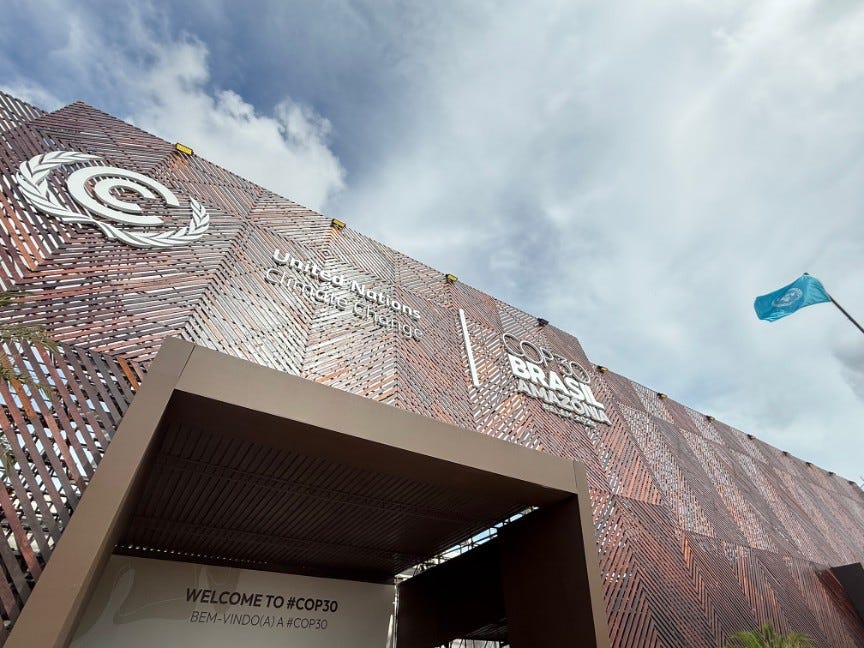
The Fatigue of Promises, the Awakening of Capital
From Political Rhetoric to Systems Engineering
On the ground in Belém, Brazil, climate crisis in the Global South is not abstract—it’s the collapse of daily life. As political promises continue to falter, a pressing question arises: What’s more pragmatic than actually solving the problem?
According to Rebecca Shen (申心蓓)—Head of COP Taskforce at STUF United Fund, Founder of Infinity Consulting, and Managing Partner at De‑Yi Law Firm—the next frontier of climate action is institutional engineering.
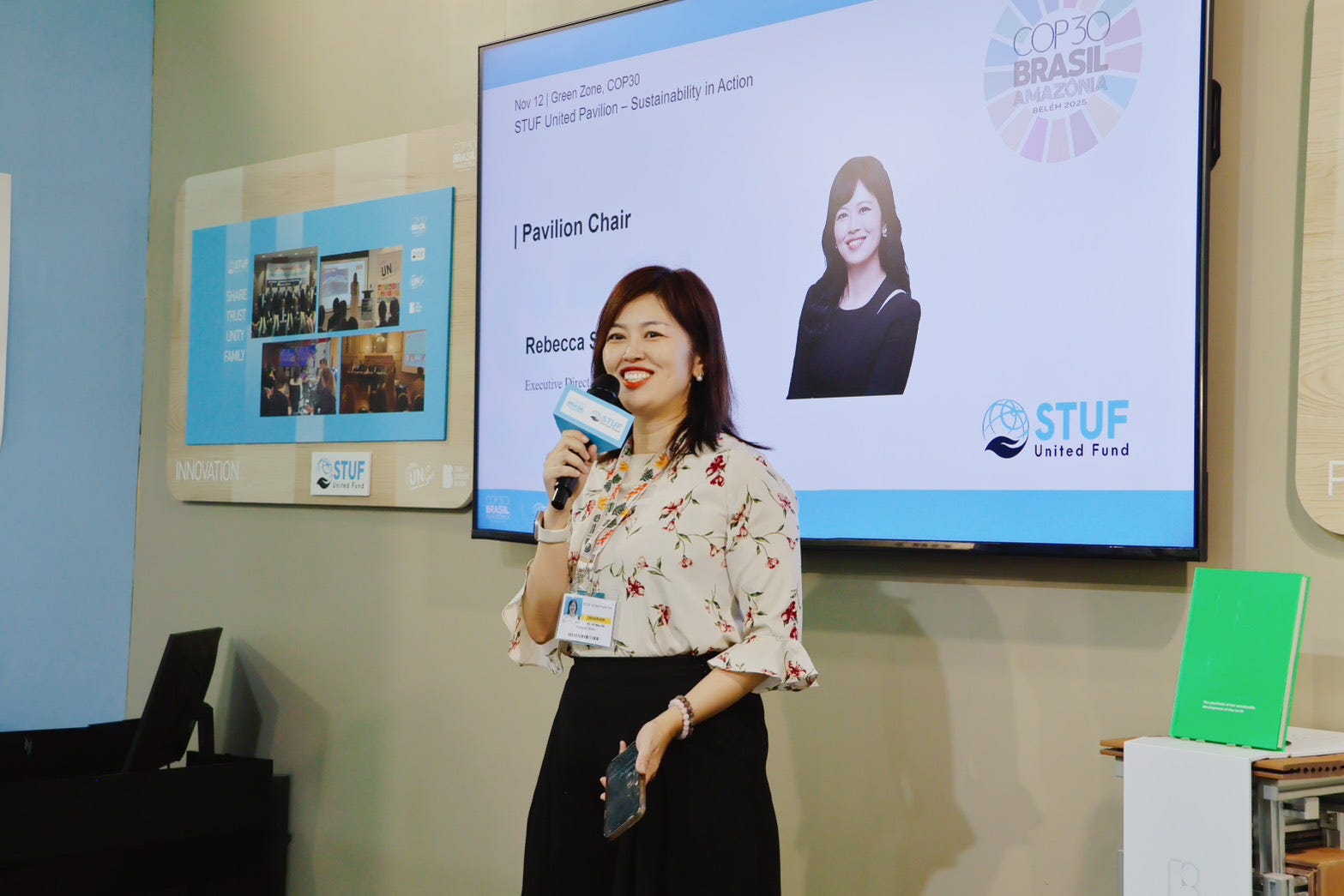
Blended Finance: When Finance, Law, and States Must Collaborate
The global debate is no longer about who pays, but how to make capital flow. At COP30, the four most cited questions around climate finance were:
Who takes the risk?
Who writes and enforces the contracts?
Who governs and audits the process?
Who builds cross-sector, cross-border trust?
These all point to the core challenge Blended Finance aims to address: the institutional gap.
Implementing blended finance requires banks, governments, and legal systems to operate in sync:
Banks & Financial Holdings|System Architects
Taiwanese financial institutions are well-versed in structuring, risk layering, and credit enhancement. Drawing from multilateral development bank (MDB) experience, they are positioned to become architects of climate finance frameworks.Sovereign Wealth Funds|Risk Bearers
The essence of blended finance lies in public entities (sovereign capital or MDBs) absorbing first-loss risk—a critical role to unlock private capital participation.Legal & Governance|Trust Builders
Contract clarity, asset rights, and transparent governance are often overlooked. Without robust legal frameworks and verification mechanisms, capital won’t engage.
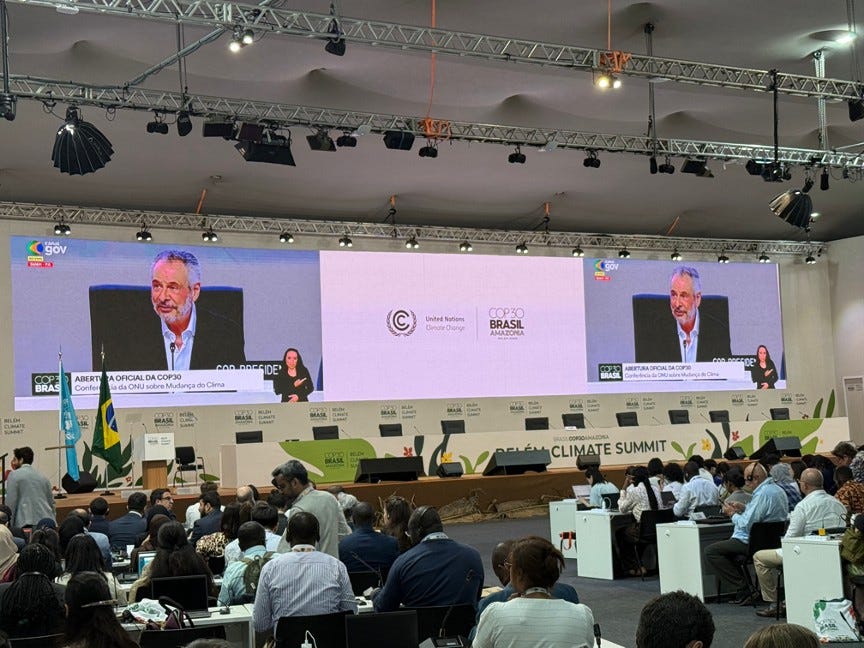
Biodiversity Credits and the Rise of “Natural Capital Engineering”
If blended finance is the funding infrastructure of climate action, then biodiversity and natural capital financialization is its asset architecture.
This year’s Nature COP spotlighted biodiversity credits, signaling a shift: nature is no longer just to be protected—it can now be measured, invested in, and governed.
The true value lies in the engineering process:
Metrics: Quantifying ecological gains
Methodologies: Standardizing cross-border comparability
MRV: Ensuring credibility through third-party verification
Ultimately, these must integrate with frameworks like TNFD and IFRS S3 to form enterprise-grade “natural credit assets.” Biodiversity credits are not an ESG add-on—they are the foundational currency of natural capital markets.
Taiwan’s Strategic Advantage: Methodology & System Integration
Taiwan lacks vast rainforests or natural reserves—does this limit its role in the natural capital economy?
Rebecca Shen’s answer is the opposite: Taiwan’s strength lies not in its forests, but in its frameworks.
At COP30, Taiwanese researchers were approached for insights on carbon sequestration and habitat assessment methodologies. Research teams from National Taiwan University even received active engagement after presenting their biodiversity credit framework in the Blue Zone.
Taiwan brings three key advantages:
Systems Integration: Sharpened through decades of semiconductor and manufacturing excellence
Methodology & Tech Proficiency: In environmental sensing, carbon modeling, ecological data, IoT and AI
Cross-sector Collaboration Culture: High trust and agility between industry, VCs, NGOs, and academia
It’s time for Taiwan to move from a follower to a rule-maker, integrating institutions and technologies as engineers of nature-based finance.
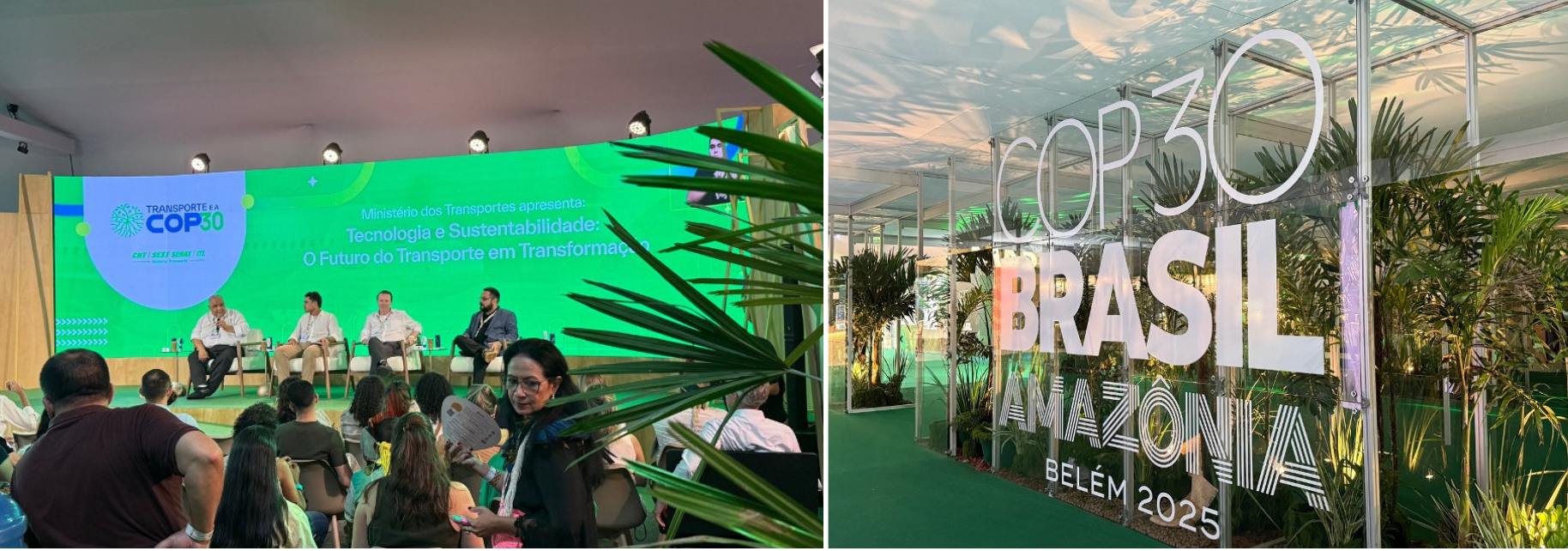
From Global Participation to Value Chain Rewriting
The next phase is not just Finance Ready, but Impact Ready.
For investors and founders, this means opportunity and accountability:
Strong MRV systems
Data-readiness
Legal contracts in place
Transparent governance structures
Meanwhile, global supply chains are reconfiguring around climate and nature risk disclosures. Taiwan must turn Scope 3 compliance pressure into strategic advantage—evolving from “global collaborator” to value chain architect.
To become truly Impact Ready is to transform from passive responder to a builder and solution provider for the next generation of sustainable capital systems.
Special Thanks
We sincerely thank Rebecca Shen for her time and insights, shared from her unique perspective as a COP observer, legal expert, and capital strategist. Her forward-looking observations shed light on Taiwan’s evolving role in the global sustainable capital landscape.
SIC looks forward to working with more partners to elevate Taiwan’s visibility and influence in shaping the future of sustainable finance.