▍Startup Ecosystem Collaboration: The Impact Linkage Between Taipei Medical University and SIC
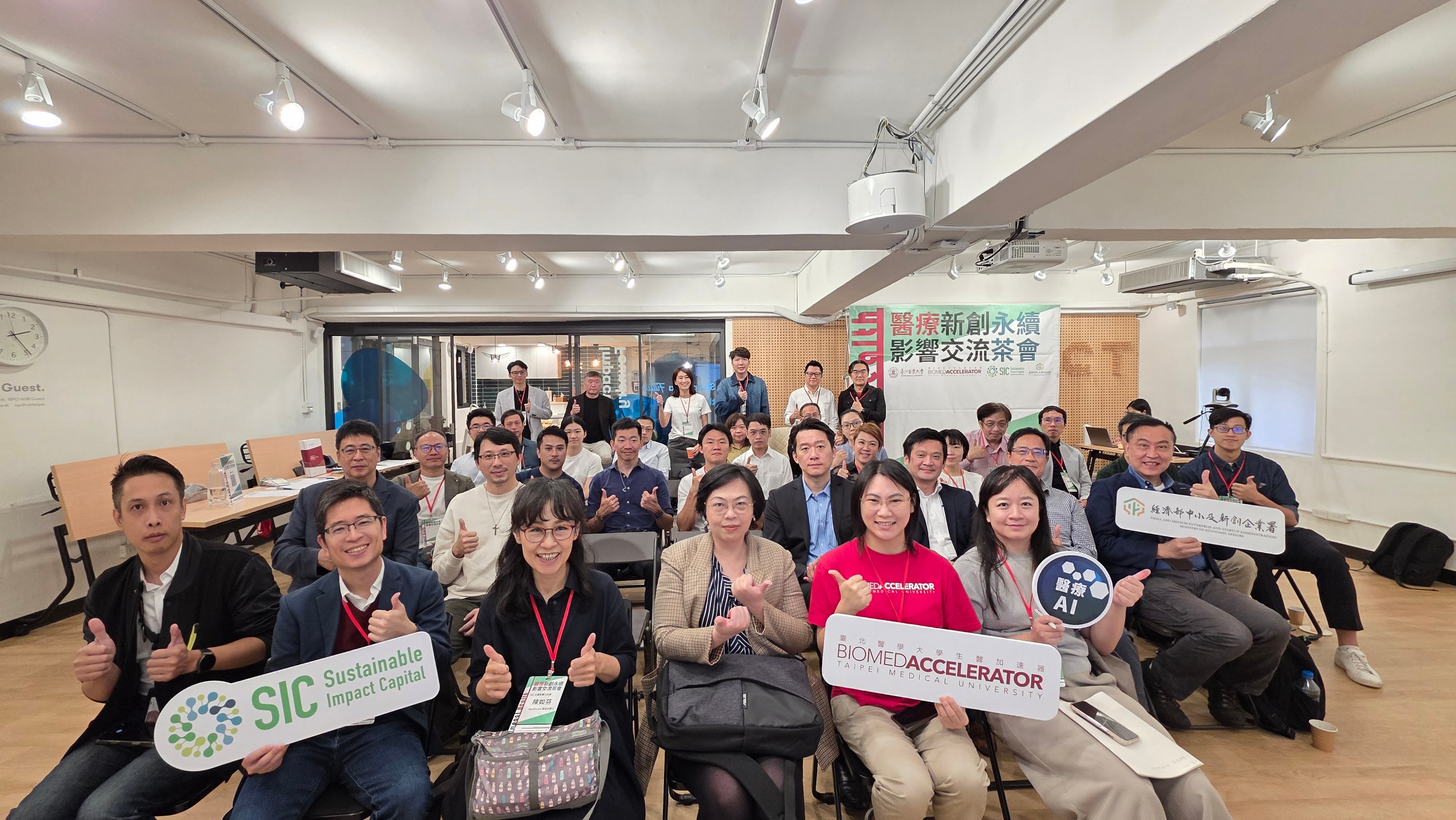
The “Impact Health – Sustainable Impact Exchange Forum for Healthcare Startups,” co-hosted by the TMU Biomed Accelerator and Sustainable Impact Capital (SIC) on November 6th, focused on the frontier trends in healthcare. It guided investors to discover six high-potential Taiwanese startups, exploring the next step in medical innovation.
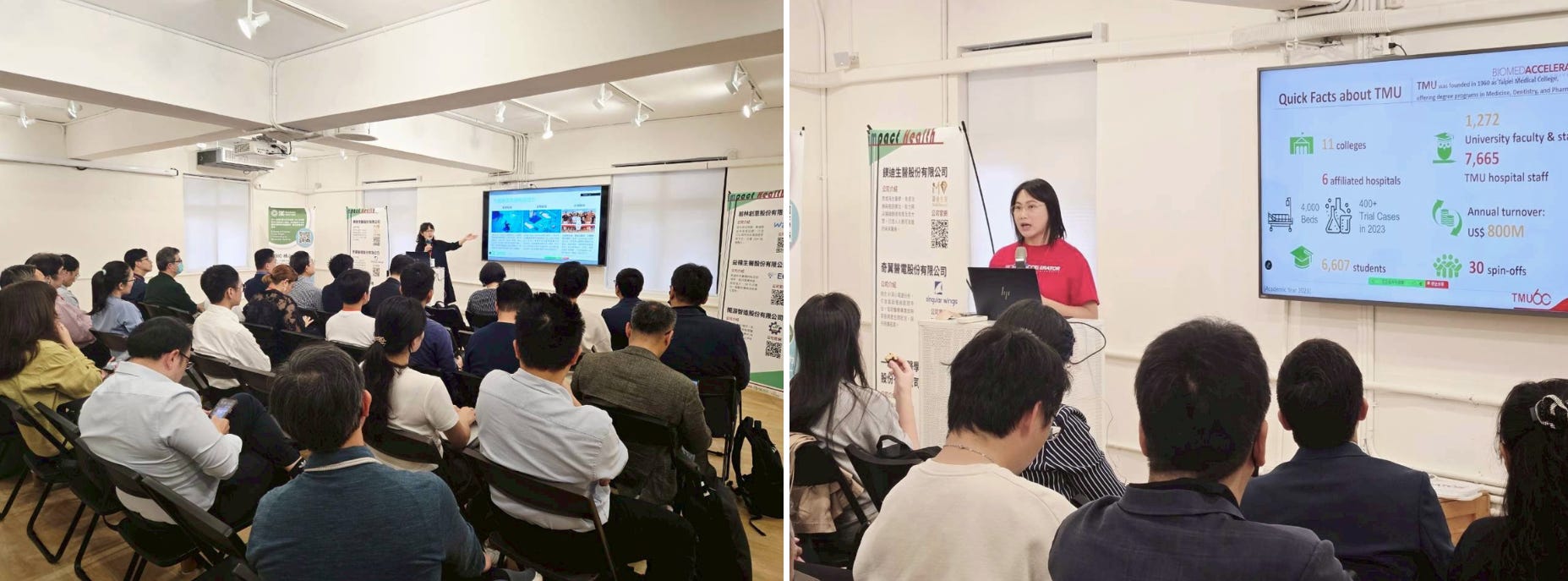
Prudence Lai (賴宜暄), COO of TMU Biomed Accelerator, first emphasized the unique advantages of the Taipei Medical University system. She highlighted that the Accelerator leverages TMU’s robust clinical network to assist startups with clinical pain point clarification, business model establishment, and product clinical validation, effectively accelerating the critical translation phase for innovative products entering the market.
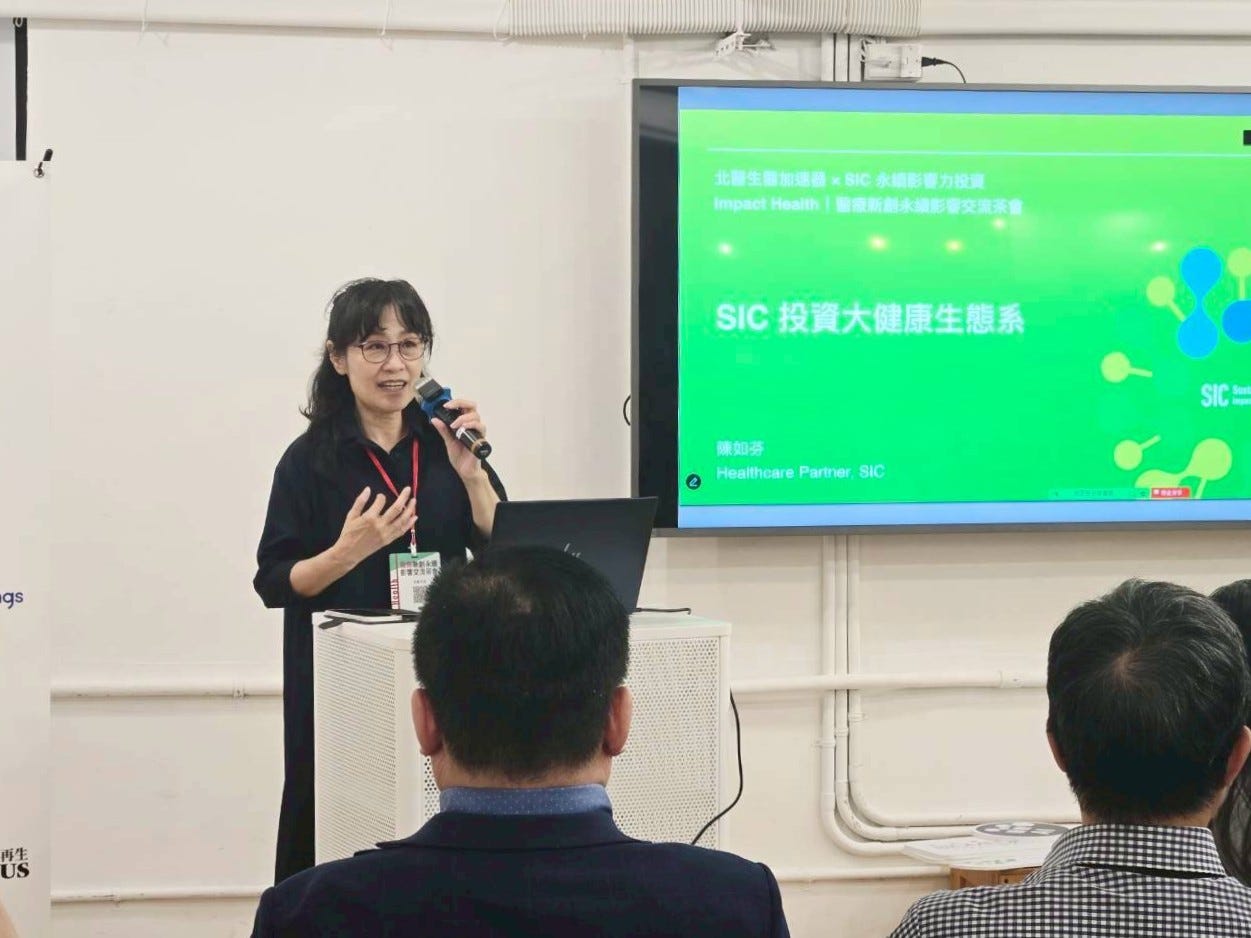
RuFen Chen (陳如芬), Healthcare Partner at SIC, elaborated on SIC’s strategic investment value from a capital perspective. She stated that SIC, as a strategic investor, not only provides financial support but also offers cross-border connections for international market expansion to the teams.
In recent years, global health issues have shifted from single treatments to a broader “Big Health Ecosystem,” combining technology, sustainability, and innovative business models, ushering in a booming wave of growth. In Taiwan, the TMU Biomed Accelerator serves as a key driver, undertaking the critical mission of medical innovation incubation and translation. SIC, as a strategic investor, has partnered with TMU to construct a complete pathway from incubation and clinical translation to strategic investment, co-creating “Impact Unicorns.”
▍Global Impact Investing: A Double Bottom Line Strategy Beyond Traditional Returns
Data from the Global Impact Investing Network (GIIN) shows that the global Impact Assets Under Management (AUM) reached $1.57 trillion in 2024, with its profitability competitive with, or even exceeding, traditional markets. Notably, Healthcare remains a significant sector, accounting for 11% of the total AUM in 2025.
RuFen Chen further categorized the Big Health market into three core trends, underscoring their vast market potential:
Precision Medicine: Driven by the widespread adoption of gene sequencing technology, promoting personalized treatment. The market is projected to exceed $212.65 billion by 2033.
Smart Healthcare: Application of AI technology, particularly in diagnosis, chronic disease management, and telemedicine. The market is projected to reach $385.28 billion by 2030, with North America retaining its dominant position.
Sustainable Healthcare: Encompasses environmental protection, digital transformation, and optimizing resource distribution, aiming for the long-term, stable service of global healthcare systems.
The market scale for both gene technology-driven precision medicine and AI-driven smart healthcare is poised to surpass hundreds of billions of dollars in the coming years, establishing them as “trillion-dollar race tracks” for global capital.
▍Taiwanese Startup Power: Local Implementation of Three Major Trends
I. Precision & Regeneration: Targeting Personalized Futures in Oncology and Tissue Repair
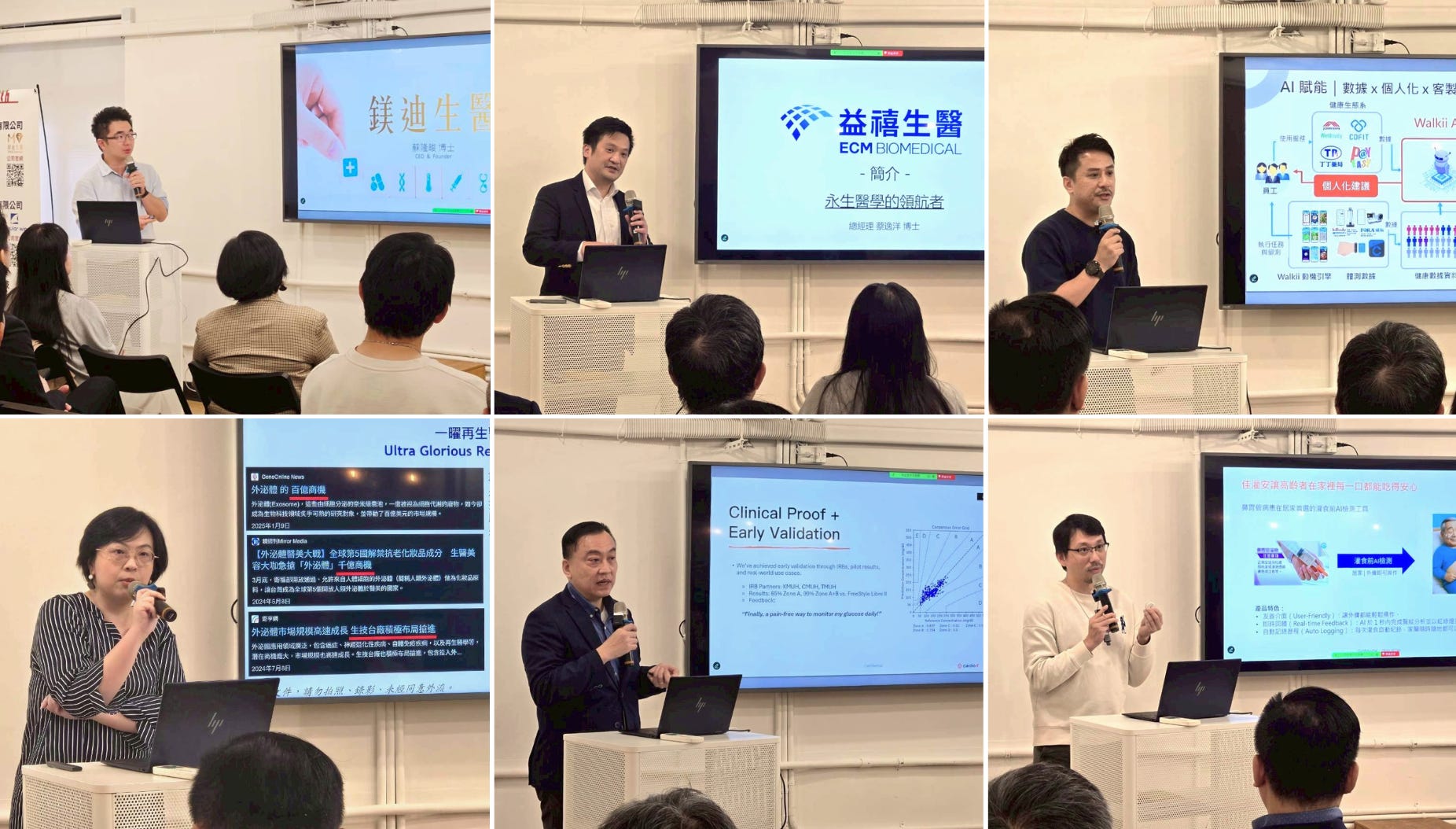
Medi Diamond Inc. (鎂迪生醫): Developed the LuminX Nano-Fluorescence Tracking Platform and the MD-ACT platform for activating memory T-cells, focusing on overcoming solid tumor immunity challenges and advancing next-generation ACT therapy.
Ultra Glorious (一曜再生): Focuses on the R&D and clinical application of human and plant exosomes, targeting medical areas such as tissue regeneration and chronic wound healing.
ECM Biomedical (益禧生醫): The only company in Asia providing multiple tissue repair and regenerative medicine implants. It utilizes unique technology to process human tissues for permanent tissue repair, positioning itself as a provider of “Immortality Medicine” solutions.
II. Smart Healthcare: AI Empowerment for Chronic Disease and Home Care
Singular Wings Medical (奇翼醫電): Uses AI and wearable sensors to develop a unique non-invasive Continuous Glucose Monitoring (CGM) system globally, aiming to revolutionize chronic disease management.
Open AI Fab (開源智造): Developed “FeedSafe” (佳灌安), the world’s first system integrating AI vocal print recognition for nasogastric tube safety detection, significantly reducing the risk of accidental misfeeding for approximately 300,000 Taiwanese users.
III. Sustainable Healthcare: Building Health ESG Data from the Workplace
Walkii (若林創意): Provides enterprises with a Sustainable Health Workplace SaaS solution through AI and gamified modules. This addresses the issue of low participation in corporate wellness and integrates employee health data into corporate ESG reports.
Through the collaborative link between the TMU Biomed Accelerator’s clinical translation capabilities and SIC’s strategic capital and international perspective, we aspire to aid Taiwanese medical innovation in taking deep local roots while connecting globally. This collaboration will deepen the positive impact of Taiwanese technology and insights within the international Big Health Ecosystem.